NVDA: Unusual Volatility
The AI juggernaut seems to be reviving, and Nvidia has quietly crept up on its former highs. As of last Friday’s close, it was up 17.9% from when it bottomed out on July 29th. For context, the S&P (SPY) was up only 6% during the same period. NVDA is now within 5% of its all-time high achieved last May 14th.
Nvidia is announcing their Q2 earnings on August 26th, and as I’ve written about before, NVDA’s implied volatility usually displays very consistent behavior before and after each announcement. Below is each earnings date (red dot) charted against NVDA’s implied volatility:
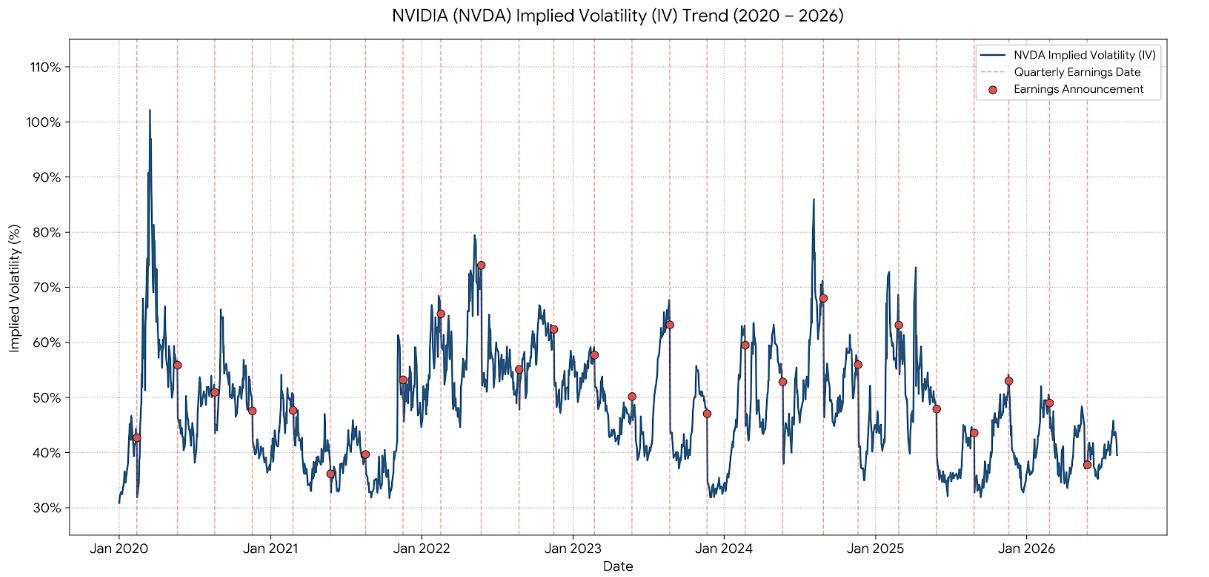
Source: OptionMetrics
Starting roughly in 2023, the earnings announcement pattern is clear: implied volatility increases beforehand and then crashes down afterwards. Below is a table detailing the changes in NVDA implied volatility 20 trading days before and after each earnings announcement since 2023:
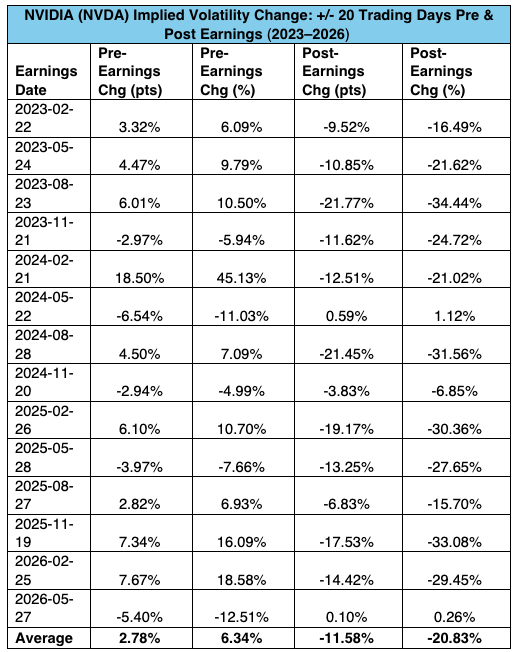
Source: OptionMetrics
Although there are exceptions, significant decreases in NVDA implied volatility after earnings announcements (“vol crush”) tend to be greater than the increases beforehand. Also, the magnitude of the changes is related to the degree to which the market is focusing on the individual announcement and the uncertainty surrounding the estimated results. The more uncertainty, the greater the runup and rundown.
What does this currently mean for NVDA options? At the time of this writing, the next earnings announcement on August 26th is only 10 trading days away. According to Google Trends, interest is increasing:
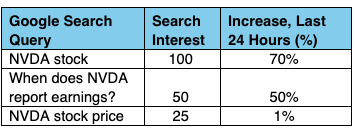
Source: Google Trends
Implied volatility should also be increasing to reflect the uncertainty surrounding the results. Surprisingly, and as you can see below, it isn’t: 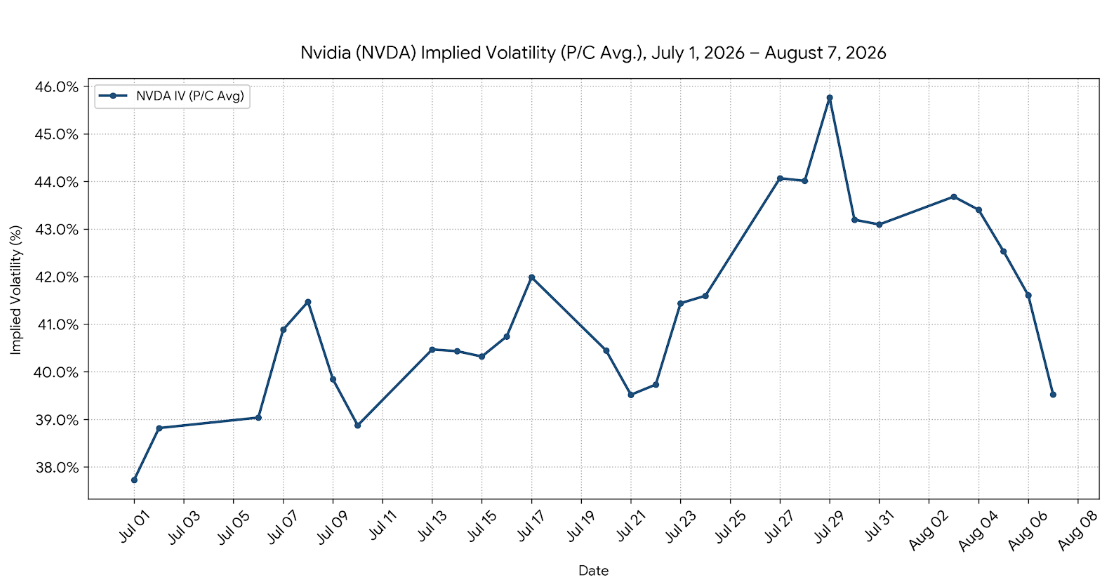
Source: OptionMetrics
What does all this mean for NVDA options traders?
Although NVDA’s pre- and post-earnings volatility pattern is not perfectly consistent, the current setup is historically unusual. That may benefit options buyers seeking pre-event long volatility exposure. It may also mean that post-event vol crush will be more limited than usual. However, given the historical record, I suspect that NVDA’s current implied volatility setup is temporary and that it will soon reflect the increasing uncertainty going into the earnings announcement on the 26th.